
“The Psychiatric Supply Chain”
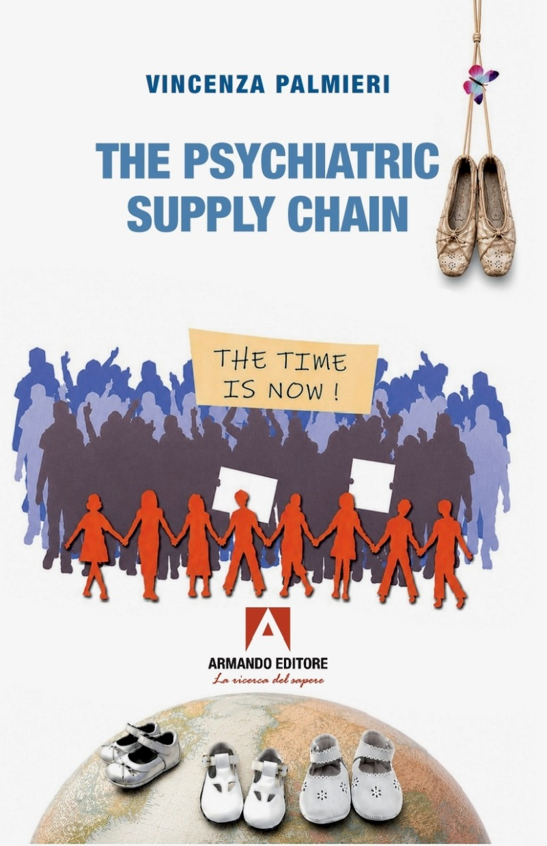
Antipsychiatry: Vincenza Palmieri’s book The Psychiatric Supply Chain is now released in English in a global edition
The author: “Because the right words to say it exist in every language in the world”
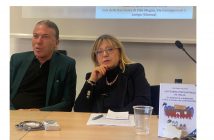
The Psychiatric Supply Chain (La Filiera Psichiatrica) by Prof. Vincenza Palmieri is finally available in English, reaching every corner of the globe. The author will present the volume for the first time in Ravenna on June 25th, during the conference “The Psychiatric Supply Chain: Will Children Make the Reforms? The Words to Say It,” as part of the documentary and photography exhibition Psychiatry and Human Rights, organized by the Citizens Commission on Human Rights (CCHR).
If words do not merely describe the world but possess the power to change it, we can safely say that the vocabulary of this book has now become part of everyday language, used not only by industry professionals but also by ordinary citizens.
Ultimately, this is the destiny of Science when it transforms into Culture and drives change: to enter everyone’s imagination, becoming the heritage of those who may not even know the origin of the term, the concept it expresses, or who first theorized it. It thus becomes shared knowledge, an engine of evolution for all of Humanity.
This book has travelled across the entirety of Italy, eventually crossing its borders.
The concept of the “Psychiatric Supply Chain” (Filiera Psichiatrica[1]) has expanded beyond the literal meaning of the words, becoming a symbol of commitment and struggle against abuse, repression, authoritarianism, and coercive interventions[2].
Its “verbal / non-verbal” message has had such an enormous impact that “today, it is impossible to ignore its scope, influence, and the consequences it has generated.”
During the numerous trips Prof. Palmieri has taken in recent months—wherever she travelled, including Hungary, Spain, the USA, Israel, Africa, and Japan—the reaction to her words was always the same:
“Why has no one ever told us all this until today?” she was repeatedly asked. “Why has no one ever explained to us how Psychiatry has changed its outfit, moving from the little man in a white coat holding electrodes to a system as sophisticated as today’s, which involves a network of interconnected professionals dedicated to abuse and business?”
“But after the initial bewilderment,” the author shares, “the response has always been unified, convinced, and strong: «Let’s start fighting. Now.»“
The message of this book, which is currently training thousands of professionals, has disrupted the industry’s bestseller charts, requiring numerous reprints due to high demand. People taking photos of themselves holding the book on social media are sending a clear message: “We have uncovered the truth, and we are on the front lines to fight all abuse.”
Psychiatric Supply Chain is a book written in simple, practical language, rich in evidence. This is why, for months, the publishing house and the author have been receiving messages from people sharing how it saved their lives or the lives of their families.
Treasuring the words of a dear friend from across the ocean—who, from the United States, encouraged and motivated Prof. Palmieri to do everything possible to ensure everyone has access to this message—the English edition of the volume was born. This is the first of a long series currently being translated into the world’s most spoken languages.
As the author herself recalls:
“To do it, you must first say it. To say it, you must first think it. And to think it, you must first possess knowledge, competence, and awareness.”
“The Psychiatric Supply Chain” represents precisely that awareness that each of us needs to say it, and then do it: to build a Better World.
The Editorial Staff of Cronaca Sociale
Notes
[1] La Filiera Psichiatrica / The Psychiatric Supply Chain: In Italian, the word “filiera” usually refers to an industrial supply chain or production line (e.g., “filiera alimentare” / food supply chain). Using it in this context is a stark, powerful metaphor coined by the author to describe a systemic, interconnected network of professionals, facilities, and economic interests operating like an industry.
[2] Coercive / Authoritative interventions In Italian administrative and family law, refers to legal measures taken by public authorities (like social services or courts) that override individual consent—such as forcibly removing children from families or mandatory psychiatric treatments.